
5 Signs You Need a New Roof (Don't Ignore #3)
Most roofs don't fail dramatically. They send signals for two or three years before the first interior leak — granules in the splash blocks, cupping shingle tabs, a small sag at the ridge, daylight where there shouldn't be any. Catching those signals early is the difference between a planned $12,000 replacement on your timeline and a $25,000 emergency replacement on the carrier's timeline after interior damage compounds the scope.
Here are the five most reliable signs you need a new roof, what each looks like, why it matters, and whether it typically calls for targeted repair or full replacement. The third sign is the one homeowners miss most often — and the one that best forecasts a roof at 70%+ of life.
1. Your roof is 20+ years old
Age alone isn't a failure signal, but it changes how every other signal should be interpreted. Architectural asphalt shingles in our service area typically deliver 20-30 years of service life with proper ventilation. Past 20 years, even a roof that *looks* fine is approaching its design lifespan — and the failure mode shifts from "obvious damage" to "sudden, scope-expanding failure during the next severe weather event."
What to do: If your roof is past 20 years and you have no recent inspection on file, schedule a free professional inspection now. Knowing whether you have 3 years of life left or 8 changes how you plan for the replacement. Our How Long Does a Roof Last? guide walks through lifespan by material in detail.
2. Missing, curling, or cracked shingles
Visible shingle damage from the ground is the most obvious end-of-life signal. Look for:
- Missing tabs — areas where shingles have been dislodged by wind, leaving the underlayment or decking exposed
- Curling or cupping — shingle edges that lift away from the deck (usually a ventilation or thermal-aging signal)
- Cracked tabs — visible splits, especially on south- and west-facing slopes that take the most UV exposure
- Bare patches — areas where granule loss has exposed the dark asphalt mat underneath
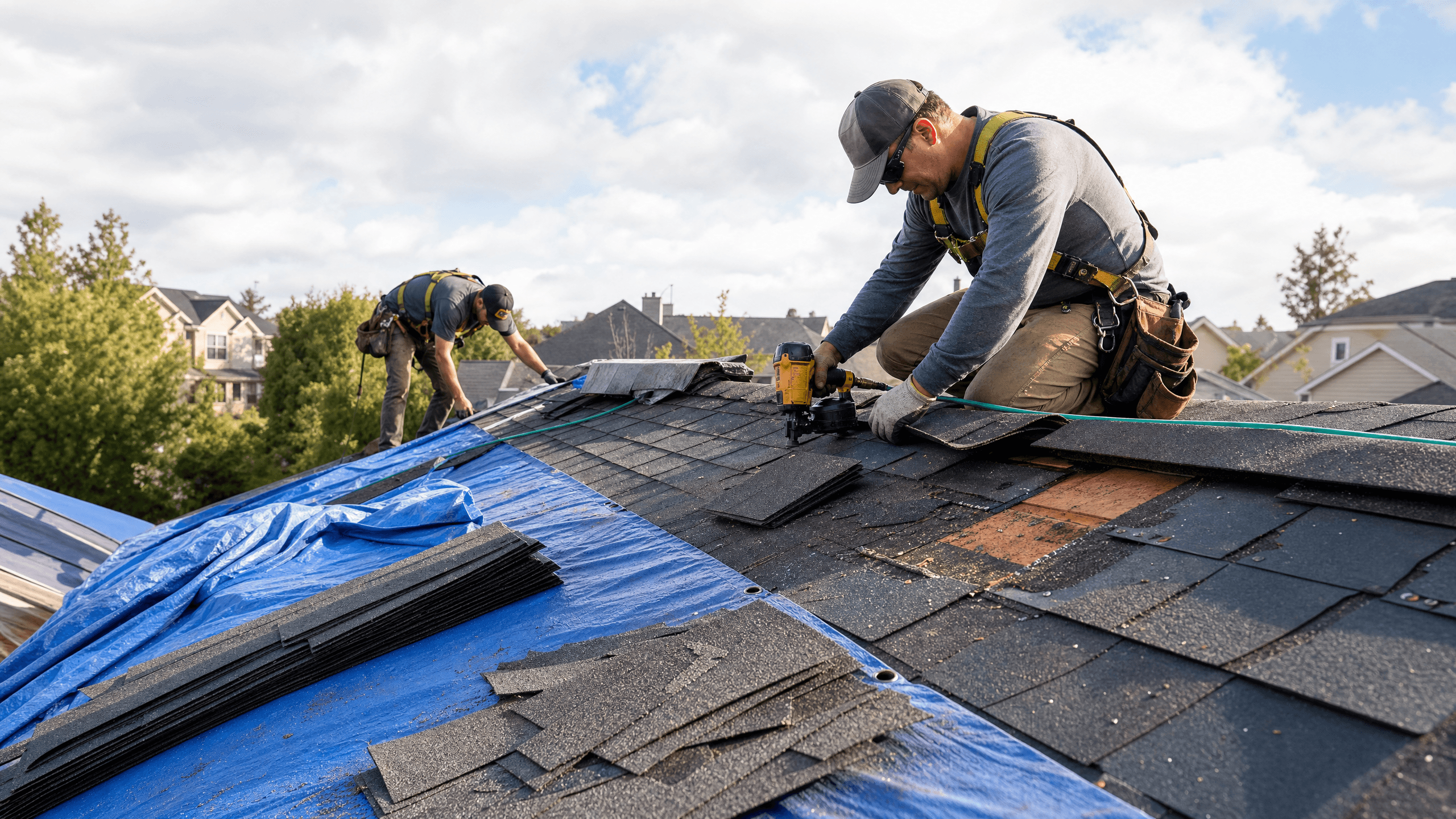
Repair vs. replace: Isolated missing or cracked shingles on an otherwise sound 5-10 year old roof are typically a repair. Widespread curling or cupping across multiple slopes on a 15+ year roof is usually a replacement conversation — patching individual tabs on a roof that's failing system-wide is throwing money at a problem that needs the full solution.
3. Granules in your gutters — the sign most people miss
This is the one that catches homeowners off guard. Asphalt shingles are protected from UV exposure by ceramic granules embedded in the surface. As the roof ages and after every hail or severe-weather event, those granules wash off and accumulate in your gutters, downspouts, and splash blocks. They look like coarse black sand.
Some granule loss is normal — a brand-new asphalt roof sheds loose granules for the first few months after install. Persistent, heavy granule accumulation on a 10+ year old roof signals the protective layer is wearing through. The bare mat exposed by the missing granules ages 3-5x faster than the protected layer, accelerating roof failure dramatically once granule loss reaches a critical threshold.
Why this matters: Granule loss is invisible from the ground when you look at the roof itself — the loss is gradual and the eye doesn't register it. But it's obvious if you check the gutters. Clean your gutters once a year (or have us do it) and pay attention to what you find at the bottom of the downspout.
4. Daylight visible through attic boards
Go into your attic on a sunny day and turn off all the lights. Daylight visible through the roof deck — not just at vent penetrations — is a sign the roof is no longer continuous. The light is getting in through:
- Gaps where shingles have been torn or displaced
- Cracked or dried-out vent boots around plumbing stacks
- Failing flashings at chimneys, valleys, or wall intersections
- Cracked deck boards from age or storm damage
Repair vs. replace: Daylight at penetrations (vent boots, flashings) is typically a targeted repair. Daylight through the field of the roof itself — where light shouldn't get through any normal roof system — is a strong replacement signal.
5. Sagging or uneven roofline
Visible sagging in the ridge line or along the rafters viewed from the street is a structural concern, not a cosmetic one. Sagging can indicate:
- Saturated decking from a long-term leak
- Rotted rafters or trusses
- Inadequate framing for the snow load or roof weight
- Foundation settlement affecting the roof structure
Is it an emergency? A noticeable sag warrants a same-week professional inspection. Structural failure of a roof is a life-safety issue — not just a property-damage one. Most cases are not active collapse risks, but the assessment should not wait.
Manufacturer resources
If the signs point to replacement, the next decision is the shingle line. The major manufacturers publish product and warranty detail worth comparing:
- Owens Corning Roofing — shingle tiers, impact-rated lines, and limited warranty terms.
- GAF — architectural shingle systems and certified-installer enhanced warranties.
- CertainTeed — shingle specifications and installation standards.
How Quest's free inspection removes the guesswork
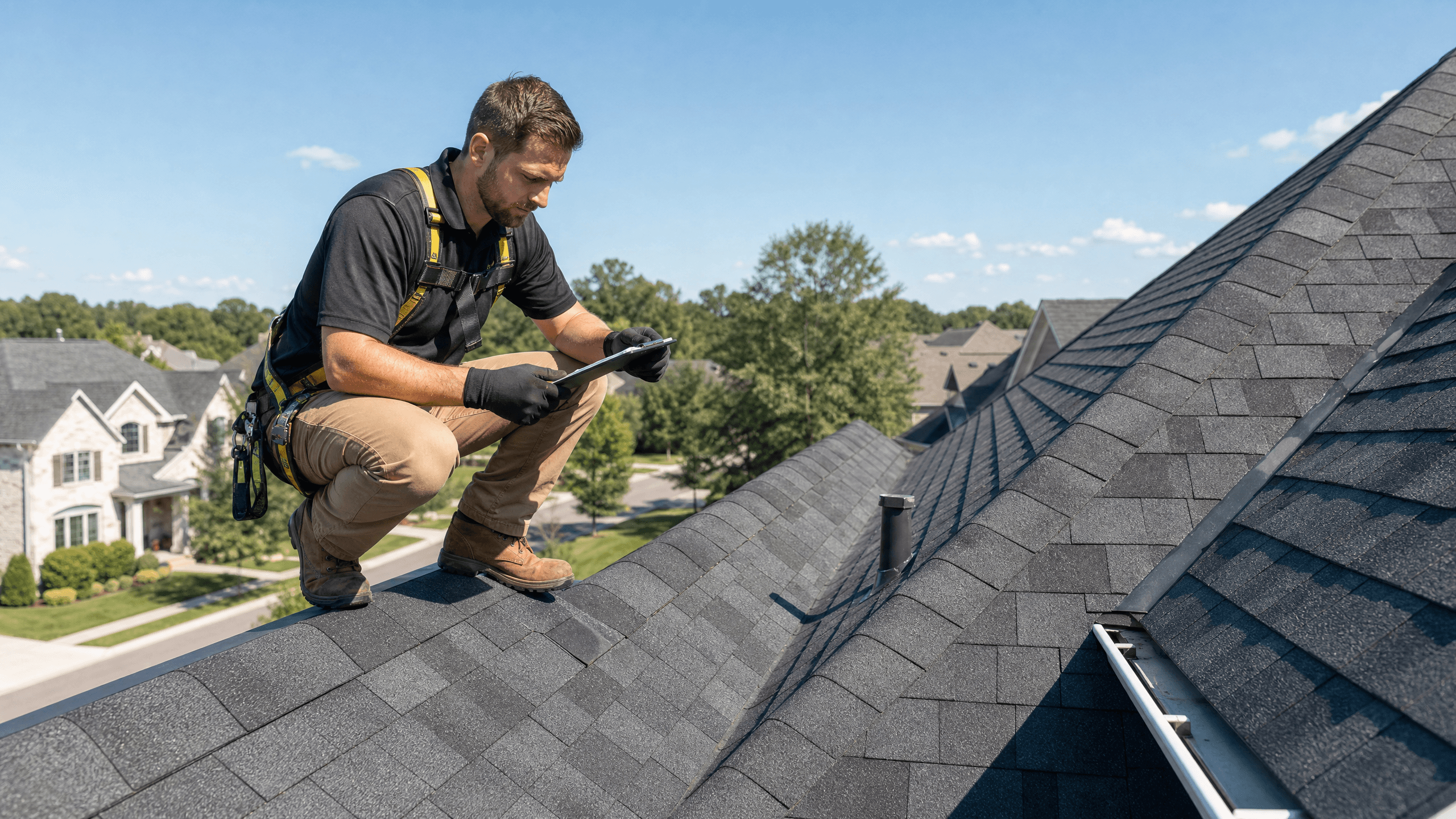
Diagnosing a roof from the ground gets you about 60% of the picture. A professional inspection delivers the other 40% — the granule loss density per slope, the soft-spot mapping on the decking, the flashing condition at every penetration, and the moisture intrusion check from inside the attic. The result is a written report with photos, slope diagrams, and a clear recommendation: repair, plan for replacement in 2-3 years, or replace now.
Quest Exteriors provides this inspection at no charge across our 23-state service area. There's no high-pressure sales follow-up — we tell you what you have, what we'd do if it were our roof, and what the realistic cost would be. Book a free inspection or learn more about how we approach residential and commercial roofing.